
Storage and Oxidation Control for Walnuts: Temperature and Oxygen Management
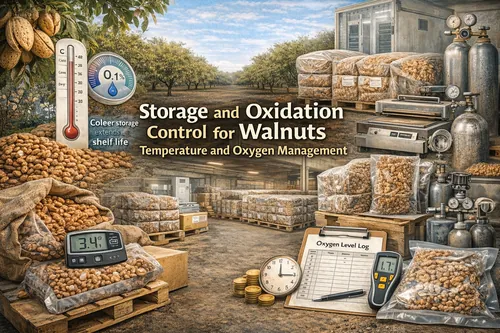
Industrial buyer guide to bulk walnut storage: how temperature and oxygen exposure drive oxidation and shelf-life performance. Includes practical packaging and handling practices, procurement checklists for specs and COA, receiving controls, shipping risk notes, a monitoring plan, and FAQ.
Previous: Color and Defect Control in Walnuts: What Buyers Should Specify • Next: Traceability and Crop-Year Planning for Walnut Buyers: Forecasting and Programs
Related: bulk walnut products • products catalog • request a quote
Why storage and oxidation control matter to walnut buyers
Walnuts are a high-fat ingredient and are often more oxidation-sensitive than many other nut ingredients. For industrial programs, “walnut quality” is not just color and defects at ship time—it is how the product behaves after weeks or months in your supply chain.
What buyers notice when storage control is weak
- Flavor drift and rancidity complaints: “stale,” “painty,” or “bitter” notes appearing earlier than expected.
- Shortened shelf-life stability: lots pass receiving but fail later in production or finished goods.
- Higher variability by pallet: temperature history can differ within the same lot if pallets sit in different zones.
- More rework: blending, downgrading applications, additional sensory checks, or increased rejection risk.
Procurement framing: Buying clean lots helps, but storage and oxygen discipline are what protect your finished product. If you hold inventory or ship through warm lanes, storage control is one of the highest leverage actions you can take.
Oxidation and rancidity basics: the buyer’s model
Oxidation is a chemical process where fats react over time, producing compounds that create off-notes. For buyers, the goal is practical: slow oxidation so that walnuts stay within sensory targets through your intended shelf life.
The four drivers that matter most
- Temperature: heat speeds oxidation and can rapidly shorten shelf-life stability.
- Oxygen exposure: every opening event introduces new oxygen and accelerates drift.
- Time: longer storage periods require tighter control and stronger packaging discipline.
- Surface area and damage: pieces and broken kernels typically oxidize faster than intact kernels.
Why pieces often need tighter storage discipline
Pieces have more exposed surface area, which increases oxidation opportunity. If you use walnut pieces in flavor-sensitive applications (snack mixes, confections, dairy alternatives), consider aligning on tighter sensory and storage expectations than you would for some other formats.
Temperature management: the strongest lever to slow oxidation
Temperature is often the biggest lever because it directly affects oxidation rate. The right approach is not “always cold storage,” but “match storage control to your risk profile.”
When cooler storage is most valuable
- Long holding periods: inventory turns measured in months rather than weeks.
- Warm climates or peak-heat seasons: higher ambient temperature increases baseline risk.
- Export/long transit lanes: longer exposure time compounds oxidation.
- Flavor-sensitive products: premium snack mixes, confections, clean-label products with mild bases.
- High value SKUs: when one complaint costs more than improved storage.
Temperature swings: the quiet shelf-life killer
Swings can create variable pallet histories and increase condensation risk in some scenarios. Operationally, swings also make lot behavior harder to predict: one pallet stays stable, another drifts.
Buyer actions that improve outcomes
- Communicate planned inventory turns and finished-product shelf-life requirements during qualification.
- Align “storage recommendation” language between supplier, warehouse, and plant.
- If your program is high sensitivity, set expectations for temperature-controlled storage and/or shipping where feasible.
Oxygen management after opening: where many bulk programs lose shelf life
In bulk operations, the most common oxygen failure is simple: partial cases or bags are opened and not resealed tightly, or pallets are staged in warm areas for extended periods. Every opening introduces oxygen; warm air accelerates oxidation.
Common operational failure modes
- Partials left unsealed: “folded” liners still leak oxygen over time.
- Too many cases open at once: exposure increases surface area and oxygen contact.
- Staging outside controlled storage: product sits near production lines for days.
- Transfers to bins/totes without controls: exposure without time limits or covers.
Simple rules that protect walnut shelf life
- Open only what you will use: align pack size to consumption rate when possible.
- Reseal immediately: make resealing a standard operating step, not an informal habit.
- Label partials: lot code + opened date + responsible line.
- Return partials to storage: minimize warm exposure time between pulls.
Practical insight: If walnut complaints happen late in the lot, it is often a handling-after-opening issue. Tracking opened dates and staging time can reveal the pattern quickly.
Packaging options and why they matter for oxidation control
Packaging is your first line of defense against oxygen exposure and environmental drift. For bulk walnuts, packaging quality shows up as better aroma retention, fewer “mystery” flavor issues, and less lot-to-lot variability in inventory.
Packaging features buyers often evaluate
- Barrier liners and seal integrity: reduces oxygen ingress and helps preserve aroma over time.
- Puncture resistance: prevents warehouse damage that compromises protection.
- Lot code visibility: improves traceability and FEFO/FIFO execution.
- Configuration: case/bag size affects how often product is opened and how easy it is to reseal.
When to tighten packaging expectations
Tighten packaging expectations when you have long transit lanes, long holding time, warm environments, or high sensitivity SKUs. The goal is not “fancy packaging,” it is reduced oxygen exposure and fewer handling failures.
Warehouse practices that preserve walnut quality
Warehouse discipline turns storage guidance into actual shelf-life performance. The best programs are the simplest ones executed consistently.
1) Storage location strategy
- Avoid dock/door zones: biggest temperature swings happen here.
- Keep pallets intact: limit “partial scattering” that increases oxygen exposure and traceability confusion.
- Keep off floors: improves sanitation and reduces moisture-event exposure.
- Allergen controls: walnuts are a tree nut allergen; store with clear identification and segregation practices where required.
2) Inventory rotation: FIFO vs FEFO
FIFO is common. FEFO can be more protective when you have reliable date coding and long holding periods. The most important point is to execute rotation by lot code consistently and avoid uncontrolled mixing of partials.
3) Retains and drift tracking
Keep retained samples by lot code and review them periodically against a reference lot. If a complaint occurs, compares between receiving retain, in-process product, and finished goods quickly show whether the issue is supply-side or handling-side.
Shipping and transit risks: heat + time compounds oxidation
Transit is often the missing chapter in oxidation control. Walnuts can be exposed to higher temperatures in trailers, yards, and ports than buyers expect. Longer transit time compounds exposure, especially in warm seasons.
Common transit risk drivers
- Hot trailers and yard dwell time: product waiting in trailers can run hotter than warehouse conditions.
- Multiple stops: repeated openings introduce warm air and oxygen exposure.
- Delays: longer time in transit amplifies oxidation risk.
- Load damage: punctures and seal failures degrade protection.
Buyer actions that reduce transit risk
- Plan inventory to reduce emergency freight during peak heat windows.
- Confirm pallet protection and labeling/lot code readability on arrival.
- For high-sensitivity programs, align shipping and storage recommendations with your destination lane.
Monitoring plan: making oxidation control measurable
You don’t need a lab-heavy program to improve shelf-life stability. You need consistent checkpoints that catch drift early.
Practical monitoring elements
- Warehouse condition logging: track general temperature trends where walnuts are stored, especially in warm seasons.
- Sensory checks: odor checks at receiving and before long-hold usage; flag drift early.
- Retain reviews: compare retained samples against a reference lot periodically.
- Nonconformance pattern tracking: track issues by lot code and storage location to identify systemic causes.
If drift appears, act early: accelerate usage, assign to more robust applications, or isolate for further review. Early action prevents a borderline lot from becoming a high-cost complaint.
Procurement checklist: specs and COA fields that support storage success
The best storage program starts with the right buying controls. A spec that reflects your shelf-life needs reduces disputes and protects finished goods.
Core spec items to define
- Format: kernels, halves/pieces, meal/flour, roasted (if applicable).
- Color expectations: define acceptable color for your application (especially for premium products).
- Moisture target: stability driver; align to your storage and shelf-life posture.
- Defect limits: insect damage, mold/decay, shrivel, and other defect categories tied to program quality.
- Foreign material limits: shell fragments and other FM controls aligned to your receiving inspection.
- Sensory acceptance: clean walnut aroma; no rancid or musty notes at receipt.
- Packaging requirements: liner/seal expectations, labeling and lot code placement.
- Storage recommendations: documented handling guidance after opening (reseal expectations, staging limits).
COA items commonly requested
- Lot code identification: must match packaging and shipment documents.
- Moisture: target and method reference if provided.
- Defect summary (if available): key defect categories relevant to your spec.
- Traceability identifiers: production/shipment identifiers to support internal tracking.
- Allergen statement / COO: as required by your labeling and compliance workflows.
Receiving checklist: what to inspect to protect walnut shelf life
- Packaging integrity: no punctures, water damage, broken seals; intact liners.
- Lot code capture: record and link lot code to COA and internal inventory records.
- Odor check: clean, fresh walnut aroma; hold/reject if rancid, painty, or musty notes are present.
- Visual check: color consistency, minimal shell fragments/debris, no visible mold.
- Prompt storage: avoid long dock dwell time; move into appropriate storage conditions.
- Retains: keep a retained sample by lot for shelf-life tracking and investigations.
Operations tip: Track “opened date” for partial pallets. Many late-lot complaints trace back to repeated oxygen exposure after opening.
Questions to ask suppliers
You don’t need to be a storage scientist to buy well. You need questions that map to shelf-life outcomes.
- What storage conditions do you recommend for this format and lane? Ask for practical guidance, not generic phrases.
- What packaging options and barrier levels are available? Align to your holding time and transit risk.
- How should product be handled after opening? Resealing expectations, staging limits, and partial pallet practices.
- What are typical defect and color ranges by grade and crop year? Helps plan risk buffers and acceptance criteria.
- Can you provide a sample COA? Confirm lot linkage and the fields your QA team needs.
FAQ: storage and oxidation control for walnuts
Why are walnuts so sensitive to oxidation?
Walnuts are high in polyunsaturated fats, which are more prone to oxidation. In practical supply chains, heat and oxygen exposure accelerate flavor drift, especially in kernels and pieces.
Do walnuts need cold storage?
Not always, but cooler storage generally improves shelf-life stability. Cold storage is most valuable when holding time is long, climate is warm, transit is long, or applications are flavor-sensitive.
What is the most common oxygen mistake in bulk plants?
Leaving partial cases/bags unsealed or repeatedly opening product without resealing discipline. This introduces oxygen repeatedly and accelerates oxidation, especially when staging occurs in warm areas.
What should we check first if we get rancidity complaints?
Start with lot-level traceability: compare receiving retains vs in-process product and review storage and staging history. Many complaints correlate with warm exposure, long holding time, or repeated opening events rather than a single “bad lot.”
Next step
If you share your application, format (kernels/halves/pieces), destination lane, and expected inventory turns, we can recommend practical spec checkpoints and packaging options that match your shelf-life targets. Use Request a Quote or email contact@atlastradehouse.com.
For sourcing, visit bulk walnut products or browse the full products catalog.