
Bulk edible oil • Drums/totes • Sensory + oxidation targets • California sourcing

Bulk Cold-Pressed Edible Walnut Oil

Atlas Nut Supply, LLC supplies bulk cold-pressed edible walnut oil for manufacturers, brands, and distributors who need a consistent procurement lane (not a one-off spot buy). We cooperate with California supplier programs to match your sensory profile, oxidation stability targets, packaging, documentation, and delivery requirements for U.S. distribution and export shipments.

Cold-pressed walnut oil is typically chosen when walnut aroma and taste matter in the finished product. In bulk manufacturing programs, it’s commonly qualified by odor/flavor, acid value/peroxide targets, color/clarity, and pack-out constraints.

Product
Cold-pressed walnut oil
Bulk packs
Drums • totes
Support
COA • traceability • export docs

Request a quote See product specifications Back to catalog

Need other walnut formats? See bulk walnut products (kernels, pieces, meal, butter, and oil programs).

Fastest quoting: share pack type (drums/totes), sensory target (mild vs pronounced), acid value & peroxide max, and destination (and port if export).
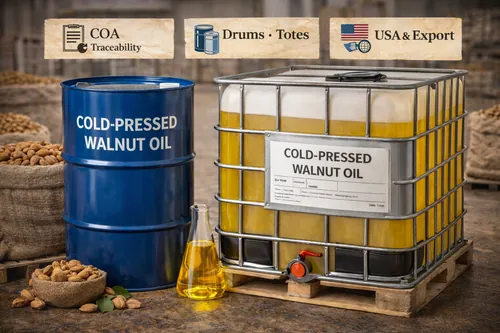
Bulk Cold-Pressed Edible Walnut Oil for wholesale supply — Atlas Nut Supply

Bulk supply focus: what buyers qualify

Cold-pressed edible walnut oil programs are typically evaluated on sensory consistency and oxidation stability first—then packaging and documentation. We build quote-ready programs around what procurement and QA teams actually check:

  • Sensory profile: target odor/flavor notes (mild vs pronounced), acceptable variation by lot, suitability for your application
  • Oxidation limits: defined thresholds (commonly acid value and peroxide value) to support shelf-life
  • Color & clarity: filtration expectations (as required) and appearance targets
  • Packaging & handling: drums or totes with receiving constraints and pallet parameters supported
  • Documentation: COA, traceability, allergen statements, country of origin, and supporting compliance docs upon request
  • Delivery lanes: U.S. domestic routes and export shipments depending on destination requirements

If you have a benchmark oil or finished-product reference, mention it—this helps align sensory expectations and reduce lot-to-lot surprises.

Cold-pressed vs refined walnut oil

Manufacturers choose cold-pressed programs when walnut character is part of the product identity. Refined walnut oil may be preferred when you need a more neutral oil with tighter sensory/color limits.

  • Choose cold-pressed for flavor-forward dressings, sauces, finishing oils, and premium blends
  • Choose refined when you need a more neutral profile for higher formulation flexibility
  • Choose crude when the oil is a processing input for downstream refining/blending

If you’re unsure, tell us the end application and heat exposure (if any). We’ll help match the right program.

Cold-pressed edible walnut oil options

Common program formats (availability varies by supplier program and season):

  • Cold-pressed edible walnut oil (bulk): sensory + oxidation targets defined for manufacturing
  • Crude/refined alternatives: available in some programs for different sensory or processing needs
  • Pack-out: drums or totes depending on receiving constraints
  • Documentation: COA and supporting compliance documents upon request (program-dependent)
Odor/Flavor Target Acid Value / PV Limits Color / Clarity Drums or Totes COA + Traceability

Bulk packaging is typically drums or totes. Share your receiving constraints (dock access, height limits, temperature control preferences) and we’ll align the right pack-out.

Industrial applications

Typical manufacturing, culinary, and ingredient uses:

  • Dressings & sauces: flavor-forward emulsions and specialty formulations
  • Finishing applications: culinary lines where walnut aroma is desired
  • Bakery & confectionery blends: fat systems where nut character supports the profile
  • Nutritional systems: ingredient blends where documented inputs and consistent lots matter

For deeper application and procurement guides, see the Atlas Nut Academy.

Product specifications (typical quote parameters)

Specs vary by supplier program, crop year, and filtration/handling. The table below shows common parameters used to qualify edible walnut oil. If you have an internal spec sheet, send it and we’ll match a program to your targets.

Parameter Typical target / range (program-defined)
Acid value (mg KOH/g) Define maximum acceptable level for your program (often used as an FFA proxy)
Peroxide value (mEq/kg) Define maximum acceptable level to support oxidation stability and shelf-life targets
Moisture & volatiles (%) Low moisture targets support handling and stability (program dependent)
Insoluble impurities (%) Define filtration/clarity expectations for your receiving and processing needs
Iodine value (g I2/100g) Useful for confirming oil identity/unsaturation (program dependent)
Saponification value (mg KOH/g) Common identity/quality parameter (program dependent)
Color / clarity Define appearance range and filtration requirements (clear vs lightly hazy)
Sensory (odor/flavor) Target “mild” vs “pronounced” walnut notes + acceptable variation by lot
Metals (Fe/Cu) & contaminants Specify limits if required by your QA program or destination market
No additives (cold-pressed) Many cold-pressed programs are specified as “no additives” (program dependent)

Tip: If you need “cold-pressed” specifically, include your expectations for filtration, sensory profile, and oxidation limits in the same request—this reduces rework and speeds up approval.

Request a quote Use the quote checklist

Composition & fatty-acid profile (useful for R&D)

Walnut oil is naturally rich in polyunsaturated fatty acids, which is one reason buyers focus on oxidation targets and storage discipline. If you’re building a nutritional panel or running R&D, share your label goals and we’ll help align a program.

Major fatty acids Typical % range (reference values; lot/program dependent)
Linoleic (C18:2) Commonly the largest fraction in walnut oil
Oleic (C18:1) Varies inversely with linoleic in many lots
Linolenic (C18:3) Secondary PUFA fraction (program/varietal dependent)
Palmitic (C16:0) + Stearic (C18:0) Smaller saturated fractions (still relevant for identity/consistency checks)

If you’re comparing suppliers, ask for COA history (multiple lots) where possible—this helps model sensory and oxidation variability over time.

Storage & shelf-life management

Storage guidance depends on your exact program, packaging, and facility conditions. In general, the goal is to reduce exposure to heat, light, and oxygen and to maintain lot-level traceability.

  • Protect from heat/light: improves stability over your target window
  • Minimize oxygen exposure: keep containers sealed; avoid repeated headspace cycling
  • FIFO rotation: align receiving and production schedules to reduce long dwell time
  • Traceability: record lot IDs through production and finished goods
  • Confirm receiving conditions: temperature controls if required for your facility

Tell us your intended use (dressings/sauces, finishing oil, blends, or other) and your desired shelf-life window, and we’ll recommend program-appropriate best practices.

Packaging: drums & totes

Bulk edible walnut oil is typically packed for industrial receiving. Include constraints in your inquiry to avoid receiving issues.

  • Pack types: drums or totes (program-dependent)
  • Pallet configuration: max height, weight limits, and dock constraints
  • Receiving constraints: forklift access, internal handling preferences, temperature controls if needed
  • Labeling: lot ID, production date (where applicable), documentation alignment for traceability

Documentation & compliance support

Typical documentation available upon request (varies by supplier program):

  • COA (including key quality parameters such as acid value and peroxide, as applicable)
  • Traceability / lot documentation
  • Allergen statements and handling declarations
  • Country of origin documents
  • Export documentation support depending on destination requirements

If you need certifications or special compliance documents, list them in your inquiry so we can match the right supplier program.

Specs checklist (quote-ready)

Send your spec sheet if you have one. Otherwise, start with the checklist below for faster alignment and fewer back-and-forth emails.

  • Product: cold-pressed edible walnut oil (note if you need refined alternative)
  • Sensory expectations: target odor/flavor profile (“mild” vs “pronounced”) + acceptable variation by lot
  • Oxidation targets: acid value max and peroxide value max; include color/clarity expectations
  • Intended use: dressings/sauces, finishing, blends, bakery/confectionery, or other application
  • Filtration/clarity needs: if your process requires a specific level of clarity
  • Allergen handling expectations: specify declarations and facility constraints if required
  • Packaging: drums or totes; include pallet limits and receiving constraints
  • Volume: first order + rolling forecast (monthly/quarterly)
  • Delivery cadence: one-time shipment vs scheduled releases
  • Destination: city/state/country (or port) and required delivery window
  • Documentation: COA, traceability, COO, and certifications if required

Share the end application and processing details and we’ll help confirm cold-pressed edible walnut oil spec targets for performance, stability, and procurement consistency.

Request a quote Contact options

FAQ: Cold-pressed edible walnut oil

What specs do you need to quote bulk cold-pressed edible walnut oil?

At minimum: packaging (drums/totes), volume and destination, and quality targets (acid value and peroxide value). For cold-pressed programs, sensory expectations (odor/flavor) and clarity/filtration needs are also important. If you have a spec sheet, share it; otherwise use the checklist above.

Do you ship cold-pressed edible walnut oil outside the United States?

Yes. We support U.S. domestic delivery and export lanes depending on destination, volume, and documentation requirements. Share the country/port and timeline so we can plan the route and paperwork.

Can you provide COA and traceability documentation?

Yes. COA and traceability documentation are available per supplier program. If you require certifications or additional compliance documents, note them in your inquiry so we can match the correct program.

How should cold-pressed edible walnut oil be stored for best shelf-life?

Best practices depend on your quality targets, packaging, and facility conditions. In general, reduce exposure to heat, light, and oxygen, use FIFO rotation, and maintain lot-level traceability. Share your storage conditions and intended use and we’ll recommend program-appropriate guidance.

Can you help us choose between cold-pressed, refined, or crude programs?

Yes. Tell us your end application, target sensory profile, and processing conditions. We’ll recommend the right lane and align documentation and packaging to your receiving requirements.