Walnuts • Dry roasted • Spec-driven sourcing • U.S. + export

Bulk Dry Roasted Walnuts

Atlas Nut Supply, LLC supplies bulk dry roasted walnut kernels to manufacturers, brands, and distributors. We cooperate with multiple California supplier programs to align the right roast profile, cut/size (halves/pieces), color sorting, packaging, QA documentation, and delivery lane for your procurement.

Dry-roast programs are commonly specified by target color, flavor intensity, crunch, and oxidation control (pack method + storage temperature).

Format
Dry roasted walnuts
Programs
U.S. + global export
Support
COA • traceability • docs

Request a quote Read applications Back to catalog

Fastest quoting: share roast level (light/medium/dark or target color), cut/size (halves/pieces), any color sort requirement, salt/seasoning needs, pack format, volume, and destination (and port if export).
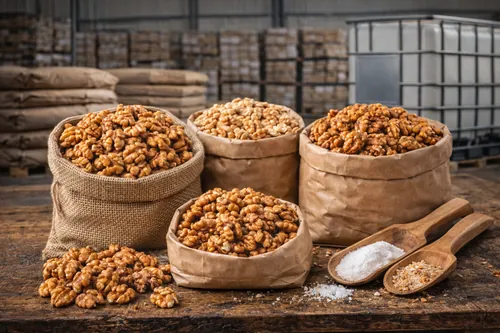
Cut: Halves / Pieces / Blends Color: Extra light → Amber (by spec) Pack: 25–30 lb cases, bulk formats Options: Vacuum / Nitrogen flush
Bulk Dry Roasted Walnuts for wholesale supply — Atlas Nut Supply

What buyers typically specify (and why)

Similar bulk roasted walnut programs in the market are usually defined by roast color, kernel cut/grade, oxidation control (packaging method + cold chain), and food safety documentation. Use the guide below to build a quote-ready spec when you don’t have a formal spec sheet.

Roast profile

Light / medium / dark, or a target color standard. Drives flavor, crunch, and bitterness notes.

Cut + color sorting

Halves, pieces, or blends; color targets (extra light to amber) for finished product appearance.

Packaging + cold chain

Barrier packaging, optional vacuum/nitrogen, and temperature expectations during transit/storage.

If you’re running trials: request a pre-shipment sample and specify an acceptable range for roast color and flavor so production matches your benchmark.

Dry roasted walnuts options

Common program variables (availability varies by season and supplier program):

  • Roast level targets: color, flavor intensity, crunch/texture, and finish (clean vs deep-roast notes).
  • Cut/size: halves, pieces, pieces & halves blends, or custom screen targets for inclusions.
  • Color sorting: align to finished product appearance (extra light to amber ranges as specified).
  • Salt/seasoning: salted/unsalted; seasoning blend constraints and label requirements (if applicable).
  • Oxidation control: pack method (barrier, vacuum, nitrogen) and storage temperature expectations.
  • Documentation: COA, lot traceability, COO, allergen statements; certifications where available.

Industrial applications

Typical manufacturing and ingredient uses:

  • Snack and trail-mix manufacturing
  • Bars, clusters, and inclusions
  • Confectionery (enrobed, candied, praline-style systems)
  • Cereal / granola and bakery toppings

For deeper application guides, see the Atlas Nut Academy.

Product specifications (build a quote-ready spec)

The table below shows common specification fields buyers use for bulk walnut kernels and roasted programs. Targets can be tightened or relaxed to match your application, shelf-life needs, and destination requirements.

Spec field Common targets (examples) Notes for procurement
Ingredient / species Walnut kernels (English/Persian walnut) Confirm if you need specific varieties for flavor/texture or consistent color sorting.
Process Dry roasted (no added oil) Define roast as light/medium/dark or provide a target color benchmark (photo/panel standard).
Cut / size designation Halves / Pieces / Pieces & Halves / Meal If you use screens: specify minimum % through / over a given opening (helps repeatability across lots).
Color sorting Extra light / Light / Light amber / Amber (or your custom range) Color affects finished product appearance; if you have strict visuals, specify the max % darker-than threshold.
Moisture Program target set to reduce clumping and protect shelf-life Dry roasting typically reduces moisture; confirm the max allowed for your packaging and storage conditions.
Oxidation (PV / FFA) Set PV and FFA limits aligned to your shelf-life target Walnuts are high in polyunsaturated fats; packaging method and temperature control are major drivers of stability.
Aflatoxin Align to destination/market limits Export markets may have stricter limits; confirm whether testing is required per lot or per campaign.
Microbiology Salmonella negative; E. coli negative; plate count limits per spec Share your sampling plan (e.g., 125g/375g) and whether you require validated lethality/pasteurization steps.
Allergen & cross-contact Tree nut allergen statement; cross-contact policy Confirm if you need sesame/peanut controls, or dedicated lines, for label compliance.
Packaging 25–30 lb cases; bulk formats (pails/drums/totes/super sacks) Barrier liner + optional vacuum/nitrogen can materially improve shelf-life; match to your distribution lane.
Temperature expectations Cool, dry storage; temperature-controlled shipping where needed For warm-season lanes, specify reefer requirements and maximum in-transit temperature.
Documentation COA, traceability/lot ID, COO, allergen statement; certifications as needed Provide your vendor QA checklist; we’ll align to the right supplier program for your compliance needs.

Tip: If you don’t have a formal spec sheet, share a target application + packaging + storage timeline. We can propose practical spec targets (cut/color/roast and QA limits) that match your finished product and shelf-life needs.

Want a faster go/no-go? Request a COA template format you prefer (PDF/CSV fields) and tell us the must-pass items (micro, aflatoxin, PV/FFA, moisture).

Bulk packaging & logistics options

Common bulk formats seen across similar industrial programs (program dependent):

  • Case packs: 25 lb and 30 lb corrugated cases with food-grade liners
  • Oxygen control: vacuum pack and/or nitrogen flush options
  • Bulk formats: fiber bins, pails/drums, totes, and super sacks for high-volume lines
  • Export loading: pallet pattern + container planning and documentation support

For best results, share your receiving setup (dock, pallet limits, liner needs, rework policy) so packaging matches your line flow.

Storage & shelf-life handling

Walnuts are sensitive to heat, light, and oxygen. Stability is driven by a combination of roast profile, packaging barrier, and temperature control.

  • Store sealed: keep liners closed between uses to reduce oxygen pickup
  • Keep cool: refrigerated or cool-room storage is often used for longer hold times
  • Avoid temperature swings: reduces condensation risk and quality drift
  • Odor control: store away from strong odors (nuts can absorb odors)

If your lane involves warm-season transit, tell us your required max temperature and whether you need reefer service.

Quality, food safety & documentation

Similar industrial suppliers commonly support COA, lot traceability, and optional programs like color sorting, validated pasteurization steps, and certification documentation. Availability depends on supplier program and pack format.

COA + traceability

Lot ID, COA fields (moisture, micro, aflatoxin, PV/FFA where required), and country of origin documentation.

Sort + defect control

Optical/laser sorting and foreign material controls for higher-spec inclusions and snack applications.

Validated programs

Pasteurization / lethality steps may be available depending on nut format and program requirements.

If you have a vendor quality packet, send it—aligning documentation early is one of the fastest ways to avoid delays at receiving.

Specs checklist (quote-ready)

Send your spec sheet if you have one. Otherwise, start with the checklist below for faster alignment.

  • Product: Dry roasted walnut kernels
  • Roast profile: light/medium/dark OR target color benchmark + flavor intensity + crunch
  • Cut/size: halves, pieces, pieces & halves blend, or screen-based spec (% through / over)
  • Color sorting: required range (extra light → amber) and max % darker-than threshold (if applicable)
  • Salt/seasoning: salted/unsalted, target salt %, seasoning profile + ingredient restrictions (if applicable)
  • Moisture + oxidation expectations: moisture max; PV/FFA limits and shelf-life target (if required)
  • Micro requirements: sampling plan and targets; pasteurization/lethality requirements if applicable
  • Packaging: 25/30 lb cases (liner type), vacuum/nitrogen options, or bulk formats (totes/super sacks/drums)
  • Volume: first order + forecast + delivery cadence
  • Destination: city/state/country (and port if export)
  • Delivery window: required ship/receipt dates
  • Documentation: COA, traceability, COO, allergen statement; certifications if required

Share the end application and lane details and we’ll help confirm practical roast, cut/color, and packaging targets for performance and shelf-life.

FAQ: Dry roasted walnuts

What specs do you need to quote bulk dry roasted walnuts?

At minimum: roast level (light/medium/dark or target color), cut/size (halves/pieces), any color sorting requirement, seasoning/salt (if any), packaging format, volume, destination, and timeline. If you have a spec sheet, share it; otherwise use the checklist above.

What’s the difference between dry roasted and oil roasted walnuts?

Dry roasting uses heat without added oil, typically producing a cleaner finish and letting walnut flavor lead. Oil roasting can change surface texture and seasoning adhesion. If you’re comparing options, share your target sensory profile and label constraints.

Do you offer salted or seasoned dry roasted walnuts?

Often yes, depending on program. Share target salt level (or sodium target), seasoning profile, and any ingredient restrictions so we can align a supply option.

Do you ship dry roasted walnuts outside the United States?

Yes. We support export lanes depending on destination, volume, and required documentation. Share the country/port, preferred pack format, and timeline for planning.

Can you provide COA and traceability documentation?

Yes. COA and traceability documentation are available per supplier program. If you require certifications, note them in your inquiry.

How should dry roasted walnuts be stored for best shelf-life?

Storage guidance depends on the exact roast profile and packaging. In general: keep sealed, cool, and dry; protect from heat, light, and oxygen exposure. Avoid temperature swings to reduce condensation risk. Share your facility conditions and hold time and we’ll recommend best practices.