
Walnuts • Retail programs • Quote-ready sourcing

Bulk Retail Packaging Programs for Walnuts

Atlas Nut Supply, LLC coordinates retail packaging programs for walnuts using California supply partners—built for brands, private label, and distributor-ready case packs. If you need walnut halves/pieces in buyer-ready retail formats with aligned specs, label coordination, and documentation support, we can help you set up the right program.

Retail programs are different from bulk ingredient lanes: success depends on pack format, case pack, pallet pattern, shelf-life expectations, and documentation requirements. We help you align those inputs early so production runs and deliveries stay predictable.

Program type
Private label + branded packs
Coverage
U.S. distribution + export lanes
Support
COA • traceability • docs

Request a quote Read applications Back to catalog

Tip: For fastest quoting, include your retail pack size, case pack, estimated launch volume, and any retailer/distributor requirements (pallet pattern, barcodes, label rules).
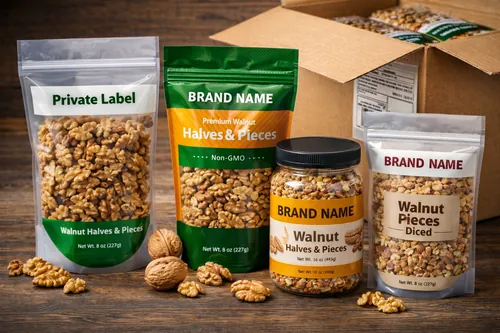
Bulk Retail Packaging Programs for Walnuts for wholesale supply — Atlas Nut Supply

Retail program options

Packaging and logistics options vary by supply partner program and customer requirements. Common program elements include:

  • Pack formats: stand-up pouches, pillow bags, and jar/tub programs (availability varies).
  • Pack sizes: single-serve to club-size; designed around shelf set, velocity targets, and margin structure.
  • Case pack planning: case counts, corrugate specs, barcode placement, and pallet patterns.
  • Label coordination: label copy inputs, ingredient statement alignment, and channel compliance inputs (as required).
  • Run planning: MOQs, lead times, and repeat-order cadence for consistent in-stocks.
  • Domestic + export: distribution and export lanes aligned to destination and timelines.

Looking for ingredient-format walnuts instead? Use Bulk Walnut Products.

Best-fit walnut formats for retail packs

Retail packs typically align to format + grade + shelf-life goals:

  • Halves & pieces: common for baking, snacks, and pantry use; grade and color alignment matters.
  • Pieces (diced / smaller cuts): more uniform fill and reduced breakage sensitivity in some pack lines.
  • Roasted programs: possible depending on program requirements; oxidation control becomes critical.

Need help selecting grade and color targets? See Academy guide: Walnut Halves and Pieces: Grade Selection.

Why format matters: halves command higher visual appeal, while pieces can improve line efficiency and reduce breakage-related claims in certain pack types.

How a retail packaging program typically works

A procurement-friendly workflow that reduces rework and shortens time-to-quote:

Walnut format (halves/pieces), grade/color targets, and any roast or pasteurization requirements.

Pack style + net weight, film/jar preferences (if any), case pack, and pallet pattern requirements.

COA needs, allergen statement, country of origin/traceability, and any channel compliance requirements.

MOQ, lead time, forecast cadence, and destination logistics (domestic or export).

If you share your launch timing and first-order volume, we can suggest realistic lead times and repeat-order cadence for steadier in-stock positions.

Packaging engineering for walnuts (freshness + shelf performance)

Walnuts contain natural oils that can pick up off-odors and develop rancidity if exposed to oxygen, heat, and light. Retail packaging choices should be made with barrier performance, consumer use, and your channel in mind.

  • Stand-up pouches (resealable): zipper closure, optional window, strong shelf presence.
  • Lay-flat / pillow bags: efficient for value SKUs and VFFS runs.
  • PET jars / tubs: premium cue; great for pantry reuse and “stay-fresh” positioning.
  • Single-serve packs: trial, variety packs, and foodservice-to-retail conversions.
  • High-barrier films: protect from oxygen and moisture; supports longer shelf-life targets.
  • Light protection: foil/metallized structures or opaque films reduce UV/light exposure.
  • Reseal features: zippers, sliders, peel/reseal to reduce post-open staling.
  • MAP / inert gas: optional nitrogen/argon flush for premium freshness positioning.

Want a fast recommendation? Tell us: channel (grocery/club/e-comm), target shelf-life, and pack size. We’ll propose a practical pack format + case pack approach aligned to your constraints.

Product specifications (buyer-facing)

Below are commonly used specification elements for walnut retail SKUs. Final specs should match your customer requirements and destination regulations.

1) Walnut grade, color, and size language (commonly referenced)

Many buyers reference standard grade language for English/Persian walnuts (Juglans regia), including color terms (extra light → amber) and size classifications (halves; pieces & halves; pieces; small pieces).

Spec field Typical options you can request
Grade U.S. No. 1; U.S. Commercial (or program-specific equivalents)
Color terms Extra light; Light; Light amber; Amber (and sometimes “red” lots, program-dependent)
Size classification Halves; Pieces & halves; Pieces; Small pieces (often defined by sieve behavior)
Defect tolerances Total defects / serious damage / shell & foreign material tolerances can be specified by grade

If your buyer specifies color and size by chart or sieve definition, include that in your RFQ—this is one of the most common sources of “quote mismatch” in walnut retail programs.

2) Typical tolerance targets (example format)

The table below shows an example of how tolerances are often expressed by grade (values shown are from a published grade standard format).

Grade Total defects Serious damage Shell & foreign material Very serious damage
U.S. No. 1 5% 2% (included in total) 1% (included in serious) 0.05% (included in very serious)
U.S. Commercial 8% 4% (included in total) 2% (included in serious) 0.05% (included in very serious)

Need a custom table for your buyer? Send the spec language your customer uses (or a competitor SKU benchmark) and we’ll align a quote-ready specification layout.

3) Typical quality & food safety specification fields

These are common “line items” in walnut kernel specifications. Use what your channel requires.

Characteristic Typical target (example) Notes
Moisture Max 5.0% (raw kernels) Often specified to support shelf-life and texture targets.
Free fatty acids Max 2% (example format) Supports oxidation/rancidity control language in buyer specs.
Aflatoxin (Total) Max 10 µg/kg (example) Use destination requirements; testing language may vary by market.
Aflatoxin B1 Max 5 µg/kg (example) Often requested for export lanes and certain customer programs.
Microbiology Salmonella absent (25g), E. coli absent, S. aureus absent (examples) Final limits depend on your customer, process, and destination.
Foreign matter Defined limit + inspection method Commonly includes shell fragments and other extraneous material.

Note: Example numerical targets above reflect a published “raw walnut kernel specification” style. Your final program spec should match your customer’s requirements, destination regulations, and validated supplier capabilities.

Request a quote with these specs Jump to quote checklist

Storage & shelf-life planning (retail realities)

Shelf-life isn’t just “a date on a label.” For walnuts, it’s a combined outcome of product quality, packaging barrier, and storage conditions. If you share your channel and expected sell-through, we’ll help you pick a practical packaging path and storage targets.

  • Cool + dry: reduce rancidity risk and protect flavor.
  • Odor control: store away from strong-smelling items; nuts can absorb odors.
  • FIFO discipline: rotate stock to protect freshness and reduce aged inventory.
  • Barrier structure: oxygen and light protection level (program-dependent).
  • Post-open behavior: reseal feature and consumer usage pattern.
  • Temperature exposure: distribution and warehouse temperature range.

If your program requires export lanes, add: port/route, transit time, and temperature exposure expectations. That often changes pack recommendations and safety stock planning.

How this compares to typical market programs

Across the nut category, private label and contract manufacturing programs commonly offer a mix of roasting/processing (when applicable) and retail packaging formats like stand-up resealable bags and PET jars/tubs, plus buyer-facing documentation and compliance support. Atlas Nut Supply focuses on aligning those same “program inputs” (specs → packaging → case pack → documentation → lanes) through California supply partners.

Consistent grade/color, clean defect language, predictable case packs, scannable labels/barcodes, and on-time delivery to the right DC/port.

Missing spec fields (color/size), unclear case pack and pallet rules, and late label approvals—especially for export lanes.

Provide a “benchmark SKU” photo or label, your target net weight, case pack, and first-order volume. We’ll map the program path quickly.

Pouches usually win on freight efficiency and display; jars/tubs win on premium cue and pantry reuse.

Request a quote Review specs

Specs checklist (quote-ready)

Send your spec sheet if you have one. Otherwise, use the checklist below to move faster.

  • Product: Retail packaging programs for walnuts
  • Walnut format: halves/pieces (or diced), and target grade/color (extra light/light/light amber/amber, if specified)
  • Food safety requirement: raw vs pasteurized; micro limits if applicable
  • Quality targets: moisture target, defect allowance, oxidation/rancidity expectations, shelf-life goal
  • Retail pack: pack style (bag/jar/tub), net weight, features (zipper/window), and label requirements (if any)
  • Case pack & pallet: units per case, case labeling/barcodes (ITF-14 / GS1 rules if required), pallet pattern constraints
  • Volume: first order + forecast cadence (monthly/quarterly), launch date, promo cadence (if any)
  • Destination: city/state/country (and port if export)
  • Documentation: COA, allergen statement, traceability/COO, certifications if required

Share your end channel (grocery, club, e-comm, foodservice) and we’ll recommend common packaging and case-pack approaches.

FAQ: Retail packaging programs for walnuts

What do you need to quote a walnut retail packaging program?

At minimum: walnut format (halves/pieces), grade/color targets, pack style + net weight, case pack, estimated volume, destination, and timeline. If you have label or retailer requirements, include them to avoid rework.

Can you support private label programs?

Yes. Many retail programs are private label. Share your brand requirements (net weight, label rules, case pack, barcodes) so we can align the right supply partner and packaging route.

Do you provide COA and traceability documentation?

Yes. Documentation availability varies by supplier program, but commonly includes COA, allergen statements, and traceability/COO support. Tell us what your customer requires.

Do you ship outside the United States?

Yes. We support export lanes depending on destination, packaging, and documentation requirements. Share the country/port and timing for planning.

How should retail-packed walnuts be stored for best shelf-life?

Shelf-life depends on format, oxidation control, packaging barrier, and your storage conditions. In general, keep product cool, dry, and protected from oxygen and light. Share your storage temperature range and expected sell-through and we’ll recommend practical targets.

What’s the most common reason retail walnut programs get delayed?

The top delay drivers are missing specification fields (especially color/size language), late label approvals, and unclear case-pack/pallet rules. If you include a benchmark SKU photo/label and your case-pack + pallet requirements up front, quoting and scheduling typically move faster.