
Bulk supply • Drums/totes • COA-driven specs • California sourcing

Bulk Crude Almond Oil

Atlas Nut Supply, LLC supplies bulk crude almond oil for manufacturers, brands, and distributors that need a dependable procurement lane—not a one-off spot buy. We cooperate with multiple California processors and bulk programs to match your specification, packaging, documentation, and delivery requirements for U.S. routes and export.

Bulk oil buying is mostly risk-control: define quality targets (FFA/PV/sensory), confirm handling/pack-out constraints, and lock in documentation. If you share your end use (blending, ingredient system, or downstream refining), we’ll align the most appropriate program.

Product
Crude almond oil
Bulk packs
Drums • totes
Support
COA • traceability • export docs

Request a quote Get quote-ready checklist See typical COA parameters Back to catalog

FFA / acid value Peroxide value (PV) Moisture & insolubles Color & sensory Drums / totes

Need other almond formats? See bulk almond products (kernels, meal/flour, butter, and more).
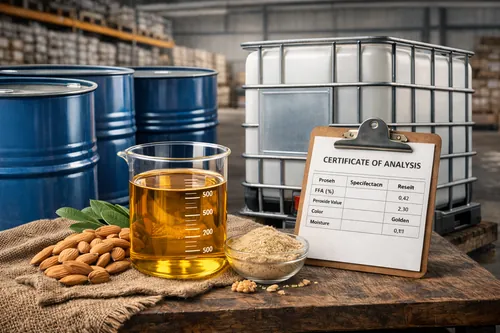
Bulk Crude Almond Oil for wholesale supply — Atlas Nut Supply

Bulk supply focus: what procurement teams need

Crude almond oil is typically sourced in bulk for consistency, throughput, and predictable unit economics. Quotes move fastest when the request includes quality targets, packaging constraints, lane, and documentation needs. We structure bulk programs around:

  • Program alignment: steady lane vs. spot volume, forecast planning, and lead-time expectations
  • Quality targets: FFA/acid value, peroxide value (PV), color/appearance, and sensory profile expectations
  • Packaging & handling: drum or tote pack-outs with receiving constraints supported
  • Compliance: COA, traceability, allergen statements (as applicable), and supporting documents upon request
  • Delivery lanes: U.S. domestic routes and export shipments depending on destination and documentation

Have a spec sheet? Attach it with your inquiry for the fastest alignment. If not, use the checklist in the Specs section below.

Why crude almond oil (vs refined) in bulk programs?

Buyers choose crude programs for different reasons depending on formulation needs and downstream processing:

  • Ingredient oil for blends where final sensory is adjusted downstream
  • Input for further refining/deodorizing (in-house or via third party)
  • Program qualified to defined oxidation and sensory limits rather than retail-finished presentation
  • Industrial formulations where documentation and repeatability matter more than consumer-facing polish

If you need a refined lane instead, note it in your request—we can align crude vs. refined options depending on program availability and your targets.

Crude almond oil options

Common program formats (availability varies by supplier program and season):

  • Crude almond oil (bulk): quotes built around FFA/PV/color/sensory targets, packaging, and lane
  • Cold-pressed edible oil programs: program-dependent options for culinary ingredient use
  • Refined alternatives: available in some programs for buyers requiring lower odor/color targets
  • Documentation support: COA/traceability, allergen statements, COO, and supporting docs upon request

Bulk packaging is typically drums or totes. Tell us your receiving constraints (forklift access, height limits, temperature controls) and we’ll match the right pack-out.

Industrial applications

Typical manufacturing and ingredient uses:

  • Sauces & dressings: emulsions, flavor systems, and specialty formulations
  • Baking & confectionery: fat systems, bakery blends, and confectionery inputs
  • Nutritional blends: ingredient systems where documented inputs and consistent lots matter
  • Processing input: base oil for further refining/deodorizing or blending (program dependent)

For broader ingredient and procurement guidance, see the Atlas Nut Academy.

Product specifications (COA parameters)

Crude almond oil specifications are usually set by agreement (your target + the supplier program’s capabilities). Below is a practical “what you can specify” list—these are the fields buyers most often use to qualify bulk oil inputs and reduce risk.

Parameter Why it matters How it’s typically specified
FFA / Acid value Primary freshness/quality indicator; affects taste/odor and downstream refining yield. Max target (e.g., “≤ X% as oleic” or “≤ X mg KOH/g”) based on your process.
Peroxide value (PV) Oxidation indicator; impacts shelf-life and sensory stability. Max target (meq O2/kg) matched to your stability requirement and lead time.
Moisture & volatiles Water accelerates degradation; impacts storage stability and handling. Max % or ppm target (often requested alongside insolubles).
Insoluble impurities Filtration/clarity; impacts pumps, lines, and finished-product appearance. Max % target; note if you require filtration level/mesh.
Color / appearance Blend consistency and finished-product aesthetics; crude oils often have higher color. Range target or max value; include clarity expectations (filtered vs unfiltered).
Sensory (odor/flavor) Prevents “surprise” notes in sauces, confections, or nutrition blends. Profile target: neutral vs characteristic; note any “must not have” off-notes.
Traceability / lot ID QA control and recall readiness; enables FIFO and internal tracking. Lot coding + COA per lot; include your documentation format needs.
Packaging & handling Prevents receiving issues; ensures your site can store and pump safely. Drums or totes; include temperature controls, dock limits, pallet constraints.

If you’re comparing crude vs refined lanes: refined oils often target lower acid value and PV than crude, while cold-pressed/virgin lanes can be different again. Tell us your intended use and we’ll align the right quality/cost balance.

Tip for faster quoting: tell us your maximum FFA, maximum PV, your pack type (drums/totes), and your destination (and port if export). Everything else can be finalized once we identify the best-fit supply program.

Composition & functionality (why formulators care)

Almond oil is commonly used as a high–monounsaturated oil input in formulations where texture, mouthfeel, and blend behavior matter. While crude programs are spec-defined, buyers often request a fatty-acid overview for R&D context.

  • Blend behavior: supports emulsions and fat systems when quality targets are controlled
  • Sensory planning: crude oils may carry stronger characteristic notes than refined oils
  • Stability planning: oxidation limits (PV) and storage conditions typically drive shelf-life performance

If your finished product is sensitive to odor/flavor or color, tell us upfront—those are solvable issues when they’re specified early.

Typical fatty-acid profile (reference)

Typical sweet almond oil is often described as predominantly oleic and linoleic acids, with smaller amounts of palmitic acid. Actual composition varies by cultivar, crop year, and processing.

Fatty acid Typical reference Note
Oleic (C18:1) ~68% Primary monounsaturated component (formulation feel & stability planning)
Linoleic (C18:2) ~26% Polyunsaturated component (oxidation planning matters)
Palmitic (C16:0) ~6% Common saturated component in many vegetable oils

If you need a composition target (or are validating for nutrition panels), tell us your requirement and we’ll align a program and COA fields accordingly.

Quality, shelf-life, and oxidation control

Crude almond oil programs are commonly qualified around oxidation and sensory stability. To reduce procurement risk, we align quotes to your required targets and handling conditions rather than generic descriptions.

Typical quality targets (quote-defined)

  • FFA / acid value: specify max target (by your standard)
  • Peroxide value (PV): specify max target (meq O2/kg)
  • Moisture & insolubles: specify max % / ppm targets
  • Color & appearance: target range and clarity expectations
  • Sensory: odor/flavor profile expectations for your application
  • Micro/allergen handling: as applicable to your internal requirements

Storage & handling (program-dependent)

  • Protect from heat, light, and air exposure to support stability
  • Confirm receiving temperature controls if your process requires it
  • Use FIFO and document lot traceability in your production workflow
  • Share your shelf-life target and we’ll align program guidance and documentation

Storage guidance differs by oil format and spec. Share your facility conditions and intended use, and we’ll recommend program-appropriate best practices.

If you want an “apples-to-apples” comparison between lanes (crude vs refined), ask for both: the same pack-out and lane with different quality targets is often the cleanest way to compare total cost and performance.

Packaging: drums & totes

Bulk almond oil is typically shipped in industrial pack-outs. To avoid receiving issues, include constraints in your request.

  • Pack types: drums or totes (program-dependent)
  • Pallet configuration: confirm max height, weight limits, and dock constraints
  • Receiving constraints: forklift access, clamp preferences, and internal handling requirements
  • Labeling: lot ID, production date, and documentation alignment for traceability

Documentation & compliance support

Typical documentation available upon request (varies by supplier program):

  • COA (including key quality parameters as applicable)
  • Traceability / lot documentation
  • Allergen statements and handling declarations (as applicable)
  • Country of origin documents
  • Export documentation support depending on destination requirements

If you need certifications or special compliance documents, list them in your inquiry so we can match the right supplier program.

Specs checklist (quote-ready)

Send your spec sheet if you have one. Otherwise, start with the checklist below for faster alignment and fewer back-and-forth emails.

  • Product: crude almond oil (note if you need refined or cold-pressed alternative)
  • Quality targets: FFA/acid value max, peroxide value (PV) max, moisture/insolubles, color range, sensory/odor expectations
  • Intended use: blending, ingredient system, culinary program, or further processing
  • Micro requirements: if applicable to your internal QA program
  • Allergen handling expectations: specify any required declarations or facility constraints (as applicable)
  • Packaging: drums or totes; include receiving constraints and pallet limits
  • Volume: first order quantity + rolling forecast (monthly/quarterly)
  • Delivery cadence: one-time shipment vs scheduled releases
  • Destination: city/state/country (or port), and required delivery window
  • Documentation: COA, traceability, COO, and any certifications if required

Share the end application and processing details and we’ll help confirm crude almond oil spec targets for performance, stability, and procurement consistency.

Request a quote Contact options

FAQ: Crude almond oil

What is crude almond oil used for in manufacturing?

Crude almond oil is used in ingredient blends, sauces and dressings, bakery and confectionery fat systems, and as an input for further refining or blending. The best program depends on your quality targets, pack-out needs, and documentation requirements.

What specs do you need to quote bulk crude almond oil?

To quote quickly: packaging (drums/totes), volume and destination, and your quality targets (FFA/acid value, PV, color, sensory expectations). If you have micro/allergen requirements or need certifications, include them in the inquiry.

Do you supply crude almond oil in drums or totes?

Yes. Bulk programs commonly ship in drums or totes (availability varies). Share receiving constraints, pallet preferences, and delivery lane so we can align a compliant pack-out.

Do you ship crude almond oil outside the United States?

Yes. We support U.S. domestic delivery and export lanes depending on destination, volume, and documentation requirements. Share the country/port and timeline so we can plan the route and paperwork.

Can you provide COA and traceability documentation?

Yes. COA and traceability documentation are available per supplier program. If you require additional compliance documents or certifications, note them in your request so we can match the correct program.

How should crude almond oil be stored for best shelf-life?

Best practices depend on your quality targets, packaging, and facility conditions. In general, reduce exposure to heat, light, and oxygen, use FIFO rotation, and maintain lot-level traceability. Share your storage conditions and intended use and we’ll recommend program-appropriate guidance.