Buyer-ready formats • Specs-first sourcing • California supply programs

Bulk Almond Products

Source California bulk almond products across kernels, cuts, milled ingredients, oils, and spreads—aligned to your application, QA requirements, packaging constraints, and delivery lane. Atlas Nut Supply, LLC cooperates with multiple California suppliers and processors to support repeatable procurement for manufacturing and global trade.

If you already know what you need, jump to the quote-ready checklist. If you’re comparing options, use the format guide and spec snapshots below to match the right almond input to your process and product performance targets.

Formats
15+
Programs
Domestic + export lanes
Support
Specs • packaging • documentation

Request a quote Open format pages Spec snapshots Back to catalog

Fastest quotes happen when you share: format + grade/size + any micro requirements + packaging + destination + docs needed. If you have a current spec sheet or COA, attach it with your inquiry.
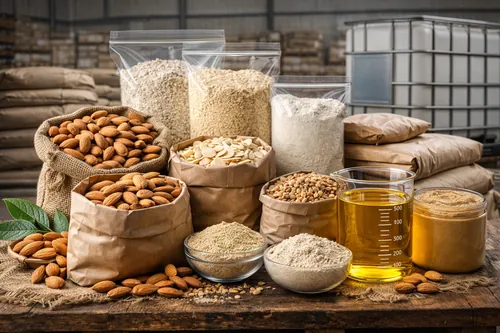
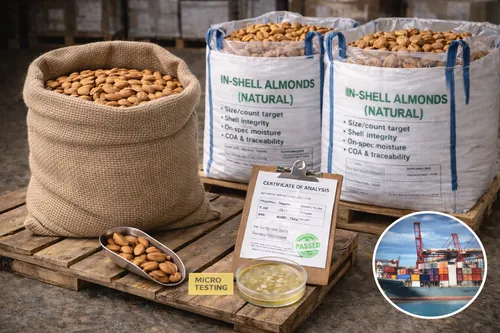
Bulk Almond Products for wholesale supply — Atlas Nut Supply

Available almond formats

Common program formats (availability varies by season and supplier program). If you require specific outcomes (blanched appearance, roast profile, micro targets, or oil specs), include them in your inquiry so we can align a quote-ready option.

  • In-shell almonds (natural programs)
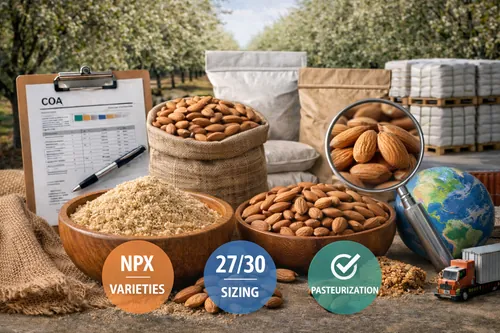
  • Raw almond kernels (whole kernels and grade-dependent styles)
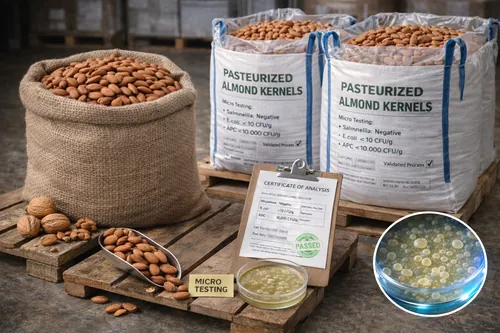
  • Pasteurized almond kernels (micro-aligned programs as required)
  • Dry roasted almonds (profile, color, and flavor intensity defined)
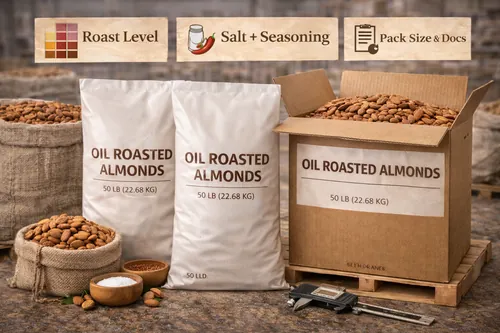
  • Oil roasted almonds (oil type, seasoning compatibility, and profile defined)
  • Diced almonds (cut size alignment for inclusions and process flow)
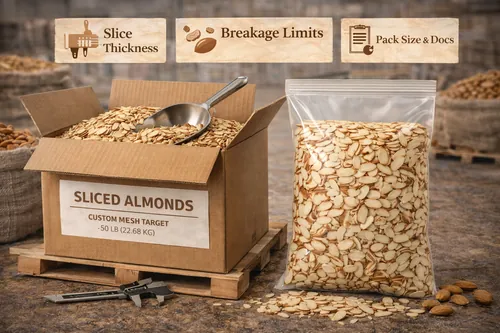
  • Sliced almonds (slice thickness, breakage tolerance, bakery topping use)
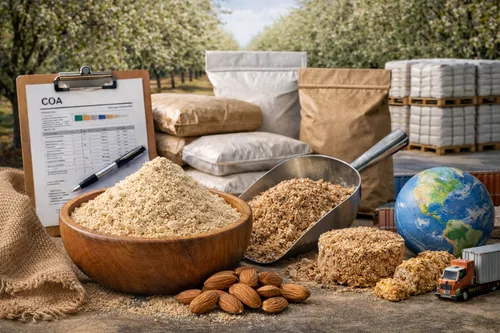
  • Almond meal (particle size and fat content alignment)
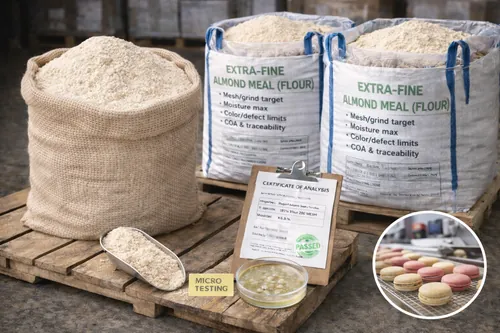
  • Extra fine almond meal / almond flour (mesh/particle size, moisture targets)
  • Defatted almond protein powder (protein and functionality targets program dependent)
  • Almond oil (cold-pressed edible, crude, refined)
  • Almond butter (grind, texture, oil separation targets)
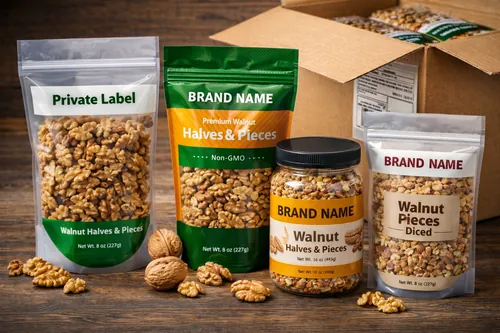
  • Retail packaging programs (channel dependent)

For each format we can align: grade/defect limits, pack-out (bags/cartons/drums/totes), and documentation (COA/traceability) per program.

Tip for new buyers: ask for a pre-ship COA and a retain sample protocol if your QA program requires it.

Industrial applications

Typical manufacturing and ingredient uses:

  • Bakery: inclusions, toppings, fillings, flour-replacement blends (format dependent)
  • Confectionery: bars, clusters, chocolate inclusions, pralines and pastes
  • Snacks: roasted kernels, seasoned SKUs, trail mix and nut blends
  • Plant-based dairy: almond bases, yogurts, frozen desserts (format dependent)
  • Nutrition: protein systems, meal/flour for macros and texture
  • Spreads & sauces: almond butter and nut-based emulsions
  • Oils: dressings and culinary oils, ingredient blends, private-label programs (program dependent)

For deeper application and procurement guidance, see the Atlas Nut Academy.

If oxidation stability matters (oils, meal/flour, long shelf-life snacks), include your storage conditions, shelf-life target, and packaging barrier needs in the inquiry.

How to choose the right almond format

Buyers often start with “almonds” and discover late-stage constraints (slice thickness in bakery lines, particle size in beverages, micro targets for ready-to-eat, or oxidation stability for oils). This quick guide helps align the right format to your process:

Kernels: whole & grade-driven programs

  • Choose kernels when appearance and bite matter in the finished product
  • Define size/grade, color expectations, and defect tolerance
  • If your QA program requires it, request pasteurized programs and share targets
  • For high-visibility applications, specify halves/whole style expectations (breakage tolerance)

Sliced & diced cuts

  • Choose sliced almonds for toppings and bakery applications—define slice thickness and breakage tolerance
  • Choose diced almonds for inclusions with consistent distribution and controlled process flow
  • Define fines allowance and magnet/foreign material controls for your line
  • Align packaging to reduce breakage and preserve freshness

Meal, flour & protein

  • Choose meal/flour for bakery blends, coatings, beverage bases, and texture systems
  • Define mesh/particle size, moisture, and color expectations
  • For protein powder programs, define protein % and functionality needs (solubility, taste, mouthfeel)
  • For beverage applications, ask about micro targets and processing compatibility

Roasted almonds, oil & butter

  • Roasted formats: specify dry vs oil roast, color targets, flavor intensity, and seasoning compatibility
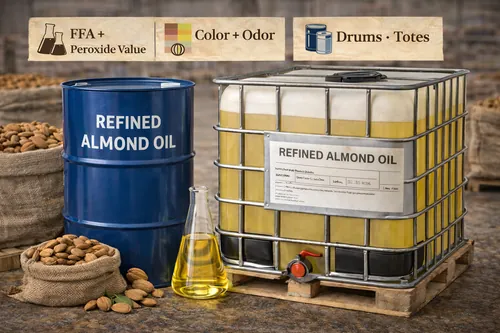
  • Oils: qualify by sensory profile and oxidation limits (commonly FFA/PV), then pack-out (drums/totes)
  • Butter: qualify by grind/texture and oil separation targets; share whether it’s a spread or ingredient input
  • For private label / culinary lanes, ask about filtration, deodorization (if applicable), and labeling requirements

If you’re switching suppliers or qualifying a new program, ask for a trial lot (pilot run) or a pre-shipment approval workflow so you can validate performance before scaling.

Specifications & COA parameters (buyer-ready snapshots)

Bulk almond purchasing is typically “spec-first”: you define the parameters that matter to your application, then the supplier program aligns COA values and documentation to your requirements. Below are the most common spec blocks procurement and QA teams use to compare programs.

In-shell almonds: grade + condition checks

In-shell programs are commonly qualified on shell appearance, soundness, and defect tolerance (plus packaging and destination requirements). Some buyers reference U.S. grade standards and then layer program-specific requirements (size, shell integrity, foreign material controls).

  • Grade reference (often used as baseline): U.S. Fancy / U.S. Extra No. 1 / U.S. No. 1 / U.S. No. 2
  • Size / count: diameter/size requirements and “fairly uniform” expectations
  • Condition: well dried, clean, free from insect infestation
  • Defects: rancidity/decay, worm injury, broken shells, doubles, foreign material
  • Appearance: natural shell (note destination preferences, if applicable)

Quote tip: include destination requirements (country/port) early—some markets have specific in-shell presentation or documentation needs.

Shelled kernels: U.S. grades (reference) + typical buyer add-ons

Many kernel programs map to U.S. grade definitions, then add your application-driven requirements (size count, color, defect limits, micro targets, and packaging constraints).

Common add-ons: size/count per ounce, whole vs broken %, color targets, maximum doubles, maximum foreign material, micro requirements (if required), and packaging barrier needs.

Grade (reference) What it emphasizes Often-quoted tolerance examples*
U.S. Fancy Whole, clean, well dried; very tight defect control Very low foreign material and defect allowances (program-defined)
U.S. Extra No. 1 Whole, clean, well dried; strong defect control Tight limits for doubles, chipping/scratching, split/broken, serious damage
U.S. No. 1 Whole, clean, well dried; moderate allowances Allows higher doubles and chipping/scratching vs top grades
Sheller-run styles Program styles used for processing lanes (program-dependent) Used when cosmetic requirements are less critical than functionality/price

*Exact tolerances and definitions depend on your chosen standard and program; your purchase spec controls what appears on the COA.

Micro & “ready-to-eat” programs (pasteurized kernels)

If your finished product is ready-to-eat (or your QA program requires it), buyers often specify a pasteurization/treatment program and request documentation that supports compliance. Requirements vary by market, channel, and your internal standards.

  • Program type: pasteurized / treated (program-defined)
  • Targets: specify any micro thresholds required by your QA program
  • Documentation: COA + process documentation upon request (program-dependent)
  • Labeling/export: confirm destination requirements; exemptions and labeling may apply in some lanes

Quote tip: include the phrase “pasteurized program required” and your target market (U.S. vs export) so we can align the correct lane and paperwork.

Cuts & milled formats: what specs usually include

Diced, sliced, meal, and flour programs typically succeed or fail on physical performance in your line. Most buyers specify particle geometry and limits for fines.

  • Diced almonds: cut size, fines %, breakage tolerance, foreign material controls
  • Sliced almonds: slice thickness, average slice length, fines %, breakage tolerance
  • Meal/flour: mesh/particle size, moisture, fat content expectations, color, flowability
  • Process fit: “does it feed?”—include line type (baking, extrusion, beverage, coating) for best match

If you’re replacing an incumbent, share a reference COA or your current acceptance range so we can match “like-for-like.”

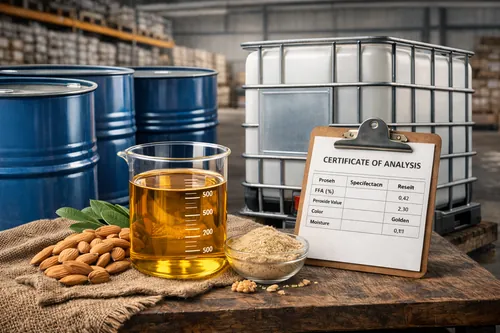
Almond oil: typical COA parameters buyers request

Oil programs are commonly qualified by oxidation stability and sensory profile first, then packaging/handling (drums/totes). Your target spec controls which tests appear on the COA.

  • Oxidation: peroxide value (PV), free fatty acids (FFA) / acid value targets
  • Appearance: color, clarity/filtration, sediment limits (if required)
  • Sensory: odor/flavor (mild vs more pronounced), acceptable variation by lot
  • Identity constants (common reference tests): iodine value, saponification value, relative density, refractive index
  • Pack-out: drums or totes; confirm receiving constraints and temperature preferences

If your application is culinary, share your heat exposure and flavor sensitivity so we can align cold-pressed vs refined options.

Almond butter: common program specs

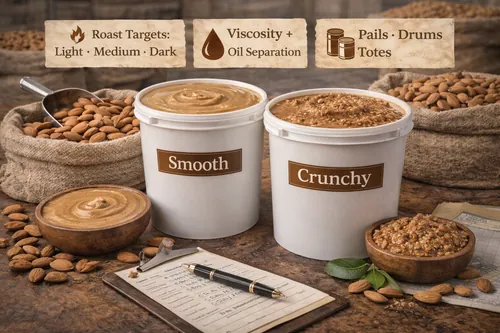
Almond butter programs are typically aligned to grind/texture and stability in your finished product (oil separation control).

  • Grind: smooth vs coarse; particle size expectations
  • Texture: viscosity/flow, spreadability, processing compatibility
  • Stability: oil separation targets; mixing/shear requirements
  • Ingredient statement: plain vs stabilized or flavored (program-dependent)
  • Pack-out: pails/drums/totes (program-dependent); confirm handling constraints

Quote tip: include whether you need ingredient butter (for baking/confectionery) vs retail-style spread performance.

Want spec sheets? Request “COA template + spec sheet” in your inquiry and we’ll align a program that matches your acceptance criteria.

Request a quote Open quote-ready checklist

Almonds product pages

Open an individual almonds format page for specs, applications, and quote-ready checklists.

Bulk In-shell almonds (natural) for wholesale supply — Atlas Nut Supply

Specs-first page for bulk in-shell almonds (natural) sourcing, packaging, documentation, and lanes.

Bulk Raw almond kernels for wholesale supply — Atlas Nut Supply

Specs-first page for bulk raw almond kernels sourcing, packaging, documentation, and lanes.

Bulk Pasteurized almond kernels for wholesale supply — Atlas Nut Supply

Specs-first page for bulk pasteurized almond kernels sourcing, packaging, documentation, and lanes.

Bulk Dry roasted almonds for wholesale supply — Atlas Nut Supply

Specs-first page for bulk dry roasted almonds sourcing, packaging, documentation, and lanes.

Bulk Oil roasted almonds for wholesale supply — Atlas Nut Supply

Specs-first page for bulk oil roasted almonds sourcing, packaging, documentation, and lanes.

Bulk Diced almonds for wholesale supply — Atlas Nut Supply

Specs-first page for bulk diced almonds sourcing, packaging, documentation, and lanes.

Bulk Sliced almonds for wholesale supply — Atlas Nut Supply

Specs-first page for bulk sliced almonds sourcing, packaging, documentation, and lanes.

Bulk Almond meal for wholesale supply — Atlas Nut Supply

Specs-first page for bulk almond meal sourcing, packaging, documentation, and lanes.

Bulk Extra fine almond meal (flour) for wholesale supply — Atlas Nut Supply

Specs-first page for bulk extra fine almond meal (flour) sourcing, packaging, documentation, and lanes.

Bulk Defatted almond protein powder for wholesale supply — Atlas Nut Supply

Specs-first page for bulk defatted almond protein powder sourcing, packaging, documentation, and lanes.

Bulk Cold-pressed edible almond oil for wholesale supply — Atlas Nut Supply

Specs-first page for bulk cold-pressed edible almond oil sourcing, packaging, documentation, and lanes.

Bulk Crude almond oil for wholesale supply — Atlas Nut Supply

Specs-first page for bulk crude almond oil sourcing, packaging, documentation, and lanes.

Bulk Refined almond oil for wholesale supply — Atlas Nut Supply

Specs-first page for bulk refined almond oil sourcing, packaging, documentation, and lanes.

Bulk Almond butter for wholesale supply — Atlas Nut Supply

Specs-first page for bulk almond butter sourcing, packaging, documentation, and lanes.

Bulk Retail packaging programs for almonds for wholesale supply — Atlas Nut Supply

Specs-first page for bulk retail packaging programs for almonds sourcing, packaging, documentation, and lanes.

If you don’t see a format you need (blanched styles, specialty cuts, customized roast profiles), include it in your message—availability varies by program.

Specs checklist (quote-ready)

Send your spec sheet if you have one. Otherwise, start with the checklist below for faster alignment.

  • Format: in-shell, kernels, roasted, diced/sliced, meal/flour, protein, oil, or butter
  • Grade & size targets: kernel size/grade, cut size, mesh/particle size (meal/flour)
  • Quality targets: moisture and oxidation/rancidity expectations (plus any shelf-life goal)
  • Roast profile: dry vs oil roast, color targets, flavor intensity (if applicable)
  • Micro requirements: specify targets; request pasteurized programs if needed
  • Allergen handling expectations: as required by your QA program
  • Packaging: bags/cartons; oils in drums/totes; include pallet and receiving constraints
  • Volume: first order + annual/rolling forecast
  • Delivery cadence: one-time shipment vs scheduled releases
  • Destination: city/state/country (or port) and required delivery window
  • Documentation: COA, COO/traceability, and certifications if required

Tell us the end application and process (baking, confectionery, beverages, milling, roasting, extrusion, or oil processing) and we’ll help confirm the best format and spec targets.

Request a quote Contact options

FAQ: bulk almond

What almond formats do you supply in bulk?

We source in-shell almonds, raw and pasteurized kernels, roasted almonds, diced and sliced cuts, almond meal and extra-fine flour, defatted protein powder, almond oil programs (cold-pressed/crude/refined), almond butter, and select retail packaging programs (program dependent).

Can you supply pasteurized almonds for specific micro targets?

Yes. Share your micro requirements and preferred pasteurization program so we can align an appropriate supply option. If your channel or export destination has special requirements, include those in the inquiry.

Do you supply almond flour and extra-fine meal for bakery applications?

Yes. We can source meal and extra-fine meal (flour) programs. Specify target mesh/particle size, moisture, and any color/defect limits. If you’re using it for beverages or high-shear systems, include your process notes so we can match a functional program.

Can you provide almond oil and almond butter in bulk?

Yes. We can supply cold-pressed edible oil as well as crude/refined oil programs, plus almond butter. Share packaging needs (drums/totes for oil) and intended end use for best alignment (culinary vs ingredient system vs further processing).

Do you support export shipments?

Yes. We support U.S. deliveries and international shipments. Share destination/port and timeline for lane planning. If you require labeling language, COO, or specific documentation, list it up front to avoid delays.

What should I include to compare suppliers apples-to-apples?

Provide your acceptance criteria: format + grade/size targets, defect tolerances, micro requirements (if any), packaging, lane/destination, and required documents. If you have a recent COA from your incumbent supplier, attach it so we can match program parameters.

What packaging options are common for bulk almonds and almond ingredients?

Programs vary, but many industrial formats ship in bags or cartons; oils typically ship in drums or totes. Share your receiving constraints (dock access, pallet height/weight limits, temperature controls) and we’ll align a pack-out that fits your facility and lane.