
Almonds • Pasteurized kernels • Quote-ready specs

Bulk Pasteurized Almond Kernels

Atlas Nut Supply, LLC supplies bulk pasteurized almond kernels to manufacturers, brands, and distributors. We cooperate with multiple California suppliers and processors to align validated pasteurization, micro requirements, kernel grade/sizing, packaging, documentation, and your delivery lane.

Pasteurized programs are typically used when buyers need defined pathogen-reduction validation and documentation support. If your customer spec references a specific validation approach or certificate language, include it in your inquiry for faster matching.

Validated treatment program Micro targets + COA Whole / halves / pieces Moisture / PV / FFA Aflatoxin / defects
Format
Pasteurized almond kernels
Programs
U.S. + global export
Support
COA • traceability • docs

Request a quote View typical specs Back to catalog

Fastest quoting: share grade (whole/halves/pieces), pasteurization/validation requirement, micro targets, pack size, volume, and destination.
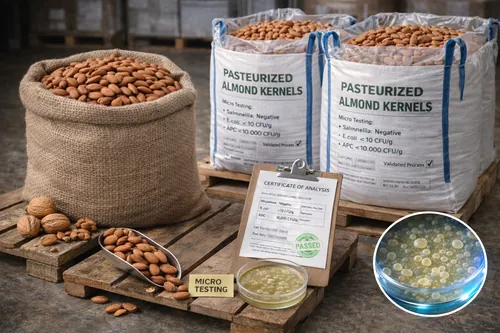
Bulk Pasteurized Almond Kernels for wholesale supply — Atlas Nut Supply

Pasteurization & validation (how buyers specify it)

“Pasteurized” is often a procurement shorthand for: validated treatment program + documentation. Many buyer specs anchor to pathogen-reduction validation (commonly framed as a multi-log reduction for Salmonella) and require treatment statements/COA language for audit readiness.

  • Validation first: program should align to your customer’s pathogen-reduction requirement and recordkeeping expectations.
  • Method may be specified: some programs request a preferred treatment approach (program dependent).
  • Documentation matters: buyers commonly request COA, lot traceability, and a treatment/pasteurization statement.
  • Export nuance: if shipping outside standard lanes, share destination and labeling/document needs early.

If your customer mentions a Letter of Determination, “validated process,” or a specific certificate statement, include that text in your inquiry so we can match the right processing partner.

Quote-ready workflow

Send your spec sheet if you have one. If not, this is usually enough to quote accurately:

  1. 1) Define your kernel format
    Whole kernels, halves, pieces, or cut size distribution (and any sizing/count requirement).
  2. 2) Provide validation + micro targets
    Your pasteurization/validation requirement and micro limits (organisms + sampling plan expectations if specified).
  3. 3) Add quality targets
    Moisture, oxidation indicators (PV/FFA), aflatoxin limits, defects/foreign material thresholds, sensory expectations.
  4. 4) Confirm packaging + destination
    Pack type, pallet constraints, ship/receipt window, and destination (port if export).

Pasteurized almond kernel options

Common program variables (availability varies by season and supplier program):

  • Validated pasteurization: program-dependent options; align to your customer requirement and documentation needs.
  • Micro targets: specify your limits/specs and any sampling plan expectations for matching.
  • Kernel grade: whole / halves / pieces; size distribution targets as applicable.
  • Moisture + shelf-life expectations: aligned to storage temperature, hold time, and downstream processing.
  • Defect limits: sorting/cleaning and foreign material thresholds (as specified).
  • Packaging: bulk packs; pallet constraints supported.
  • Documentation: COA, traceability, and supporting compliance documents per program.

Need other almond formats? See raw almond kernels, sliced almonds, or diced almonds.

Industrial applications

Typical manufacturing and ingredient uses:

  • Bakery & confectionery: whole/halves for appearance; pieces for inclusions.
  • Bars & snacks: consistent cut size for dosing and visual distribution.
  • Cereal & granola: align moisture/oxidation targets for crunch retention.
  • Nut butters & pastes: pieces/meal programs where flow and defect control matter.
  • Export programs: documentation and lane planning based on destination requirements.

For deeper application guides, see the Atlas Nut Academy.

Product specifications (typical targets)

Below are commonly used specification targets in industrial almond procurement. Exact limits vary by customer spec, grade, and supplier program. Pasteurized programs typically add (or tighten) the validation + micro portion with supporting documentation.

Category Parameter Typical target Why it matters
Micro Salmonella Not detected (e.g., in 25g) Common buyer requirement; pasteurized programs align validation + COA language.
Micro TVC / APC Target threshold (program/customer-specific) Helps manage hygiene + stability expectations in downstream processing.
Chemical Moisture < 6% Texture, clumping risk, and shelf-life stability.
Chemical Free Fatty Acids (FFA) < 1.5% Indicator tied to hydrolytic rancidity risk and storage conditions.
Chemical Peroxide Value (PV) < 10 meq/kg Indicator tied to oxidation; relevant for long holds and warm storage lanes.
Chemical Aflatoxin (Total) ≤ 10 ppb Common compliance/food safety spec in buyer QA programs.
Physical Foreign material Low/defined threshold (e.g., ≤ 0.05%) Protects line performance and finished-product risk (metal/x-ray/sieves still recommended).
Physical Defects (chips/doubles/breakage) Program-specific thresholds Controls appearance and dosing consistency for inclusions/toppings.
Commercial Grade / cut Whole / halves / pieces Pick for appearance vs inclusions vs butter/paste use.
Commercial Sizing Count-per-ounce sizing if required Helps standardize visual and mass distribution in finished goods.

Tip: if you’re running automated dosing, include your allowable fines/broken % and your flow constraints so we can match the right cut and pack configuration.

Want us to recommend targets? Share your application (bars, bakery, confectionery, cereal/granola, nut butter) and your storage/hold time. We’ll suggest practical moisture/oxidation and defect limits that balance performance and cost.

Specs checklist (quote-ready)

Send your spec sheet if you have one. Otherwise, start here for faster alignment.

  • Product: Pasteurized almond kernels
  • Pasteurization requirement: validation requirement (and any required certificate wording)
  • Micro targets: organisms/limits + sampling plan expectations (if applicable)
  • Grade / cut: whole / halves / pieces + size distribution targets
  • Sizing: count-per-ounce or size range (if required)
  • Chemical targets: moisture, FFA, peroxide value (and any other oxidation indicators if specified)
  • Food safety: aflatoxin limits (if applicable) and allergen handling expectations
  • Defect limits: foreign material and other thresholds (chips/doubles/breakage)
  • Packaging: bags/cartons/pails/drums/totes + pallet constraints
  • Volume: first order + forecast cadence
  • Destination: city/state/country (and port if export)
  • Delivery window: required ship/receipt dates
  • Documentation: COA, traceability/COO, certifications if required

Share your process conditions (mixing, baking, enrobing, freezing, etc.) and we’ll help confirm practical specs for performance and shelf-life.

FAQ: Pasteurized almond kernels

What does “pasteurized” mean for almond kernels?

For industrial buyers, “pasteurized” typically indicates almonds were treated under a validated program aligned to defined pathogen-reduction expectations, and supported with documentation (e.g., COA language, treatment statement, traceability). Share your customer’s required wording and targets so we can match the correct program.

What specs do you need to quote bulk pasteurized almond kernels?

At minimum: grade/size targets, packaging, volume, destination, and timeline. For pasteurized programs, include your validation requirement and micro targets, plus any chemical (moisture/FFA/PV) and defect limits.

Can you supply pasteurized almonds for specific micro targets?

Yes. Share your organism limits, sampling plan expectations (if any), and required documentation language. We’ll align an appropriate program and confirm what can be supported by the processor and supplier program.

Do you ship pasteurized almond kernels outside the United States?

Yes. We support export lanes depending on destination, volume, packaging, and documentation requirements. Share the country/port and timeline for planning.

Can you provide COA and traceability documentation?

Yes. COA and traceability documentation are available per supplier program. If you require certifications or specific statement language (including treatment/pasteurization wording), note it in your inquiry.

How should pasteurized almond kernels be stored for best shelf-life?

Keep sealed, cool, and protected from heat, oxygen, and light. Avoid temperature swings and keep containers closed between use. Share your storage conditions and expected hold time for more specific guidance.