Almonds • Kernels • Specs-first sourcing

Bulk Raw Almond Kernels

Atlas Nut Supply, LLC supplies bulk raw almond kernels to manufacturers, brands, and distributors. We cooperate with multiple California supply programs to align the right type/classification, variety preference (often requested as NPX / Nonpareil-type), sizing (count per ounce), pasteurization alignment (when required), quality targets, packaging, and documentation for your procurement lane.

Kernel performance is driven by uniform sizing, moisture control, and defect thresholds (chips, doubles, foreign material) tied to your finished product appearance and processing method (roasting, blanching, grinding, inclusions, or automated dosing).

Format
Whole raw kernels
Coverage
U.S. + global export
Support
COA • traceability • docs

Request a quote Specifications Back to catalog

Fastest quoting: share type (Nonpareil/California/Mission), size (e.g., 23/25), pasteurization requirement (if any), pack size, monthly volume, and your destination (and port if export).
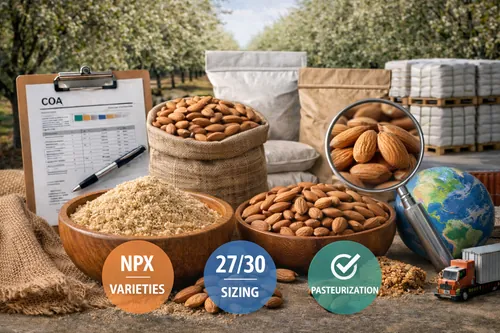
NPX / Nonpareil-type 23/25 • 25/27 • 27/30 Pasteurized (validated) Defect limits Moisture & shelf-life targets
Bulk Raw Almond Kernels for wholesale supply — Atlas Nut Supply

Raw almond kernel options (what buyers typically specify)

“Raw almond kernels” can still vary widely in how they process and present in finished products. Common variables (availability varies by season and program):

  • Type / classification: Nonpareil-type, California-type, or Mission-type (often tied to processing behavior and appearance).
  • Variety preference: some programs specify a named variety; others buy by type/classification.
  • Sizing: count per ounce (e.g., 23/25, 25/27, 27/30) for uniform roasting, coating, or dosing.
  • Pasteurization requirement: align to your lane (North America requirements vs export markets) and buyer micro targets.
  • Defect limits: chips, doubles, foreign material, discoloration, insect damage; align to QA and finished product needs.
  • Moisture + shelf-life targets: moisture, oxidation indicators (program dependent), and handling/storage constraints.
  • Packaging: cartons/bags or totes (program dependent) with liner and pallet pattern alignment.
  • Documentation: COA, allergen statements, traceability/COO, and certifications (when required by your customer).

Need other almond cuts? Consider sliced almonds, diced almonds, or almond meal.

Industrial applications & performance notes

Whole kernels are used when appearance, size uniformity, and process control matter:

  • Roasting + seasoning: uniform counts improve roast color consistency and reduce over/under-roast variation.
  • Coated nuts & confections: sizing and surface quality affect coating pickup and finished appearance.
  • Blanching / slicing / dicing: Nonpareil-type kernels are often preferred when clean blanching and processed forms are needed.
  • Bakery inclusions & toppings: defect thresholds and moisture targets protect texture and visual quality.
  • Grinding (butter, paste, meal): consistent input reduces grind variability; oxidation control matters for flavor stability.
  • Export supply programs: documentation and sampling plans may be required depending on destination and channel.

Want the “spec-first” workflow? Jump to How to buy and Specifications.

Type, NPX, and sizing: how buyers keep kernels consistent

Many “similar product” pages for industrial almonds emphasize the same three controls: type/classification, count-per-ounce sizing, and defect thresholds. These drive repeatability across roasting, coating, blanching, and automated dosing lines.

California almonds are commonly grouped into major types such as Nonpareil, California, and Mission. Type affects blanchability, skin characteristics, and processing behavior.

Many buyers request NPX as shorthand for a Nonpareil-type / appearance-focused kernel program. If you have an internal spec or customer definition for NPX, include it (type, size, defect limits, and documentation requirements).

Sizes like 23/25 or 25/27 mean the average whole kernels per ounce falls within the range. Specifying a size range improves uniformity for roasting and reduces variability in automated lines.

Buyers typically specify thresholds for chips, doubles, foreign material, and discoloration. Tightening these improves finished appearance but can impact availability and price.

If you’re unsure which type or size is best, tell us your end use (roast, blanch/slice, coatings, inclusions, grinding), and we’ll suggest practical type/size combinations to start the quote.

Pasteurization & food safety alignment (lane-dependent)

In North America, almonds introduced into commerce are required to be pasteurized using validated processes. For export lanes, requirements vary by destination and channel; some lanes allow “unpasteurized” shipment only with appropriate labeling and downstream processing.

Common ways programs define pasteurization

  • Required vs not required: define your target market and customer compliance needs.
  • Process family: buyer-accepted options may include PPO, steam, moist heat, or other validated methods (program dependent).
  • Micro targets: specify Salmonella policy, indicator limits, and sampling/testing expectations.
  • Documentation: COA, process or conformance statements, traceability/COO, and any certification package.

Why buyers care

  • Risk control: pasteurization alignment is often required by customer food-safety programs.
  • Predictability: clarified requirements reduce rework during qualification.
  • Export readiness: destination lanes may require specific sampling, certificates, or handling controls.

If you don’t know what your customer requires, tell us the channel (retail, ingredient manufacturing, private label, export) and destination, and we’ll help map the most common pasteurization/document package used in that lane.

How a bulk kernel program typically runs (procurement-friendly)

A simple workflow that shortens time-to-quote and reduces back-and-forth between procurement and QA:

U.S. domestic vs export; channel requirements (retail, ingredient, private label).

Type/classification (Nonpareil/California/Mission) and count-per-ounce size range.

Defect limits, moisture targets, and any analytical or oxidation indicators you use.

Pasteurization requirement, micro policy, sampling/testing expectations, and COA format.

Cartons/bags vs totes, liner needs, pallet pattern, and receiving constraints.

MOQ, lead time, repeat cadence, and delivery window aligned to production schedule.

If you share your first PO size and a 3–6 month forecast, we can suggest practical repeat cadence to reduce stockouts and rush freight.

Product specifications (common procurement targets)

Send your spec sheet if you have one. If not, the table below shows the most common “similar product page” spec fields buyers use to qualify bulk whole kernels. Values are examples—final targets should match your customer and regulatory lane.

Spec field What to provide Why it matters
Type / classification Nonpareil-type / California-type / Mission-type (or your internal naming) Processing behavior, blanchability, skin/appearance characteristics, and use fit
Variety / NPX Any required variety or “NPX” definition (size + defects + docs) Prevents mismatches when “NPX” is used as shorthand in procurement
Size Count-per-ounce range (e.g., 23/25, 25/27, 27/30, etc.) Uniform roasting/coating; predictable dosing and pack counts
Pasteurization Required/not required + accepted program/process family (if applicable) Food safety compliance; reduces qualification delays
Moisture Target maximum moisture (and storage temperature expectations) Texture stability, mold risk, and shelf-life behavior
Defects Chips, doubles, foreign material, discoloration thresholds Finished product appearance and QA acceptance rates
Micro policy Testing expectations (e.g., Salmonella negative policy), indicator limits, sample size QA release; customer compliance in audited channels
Packaging Carton/bag size, liner requirements, pallet constraints/pattern, container preferences Receiving efficiency, damage prevention, traceability and label compliance
Documentation COA, allergen statement, traceability/COO, certifications, export docs Qualification speed and border clearance readiness

Tip: If your kernels will be blanched/sliced/diced, tell us early—buyers commonly tighten defect limits and emphasize Nonpareil-type programs to protect yield and appearance in processed forms.

Share your end application (snack roasting, coatings, inclusions, blanch/slice, grinding) and we’ll suggest practical starting targets for type, size, and defect limits that tend to run smoothly in production.

Packaging, handling, and logistics (what “similar product” listings emphasize)

Many bulk kernel programs succeed or fail on logistics details: how the product is protected from humidity/heat, how pallets are built, and how lots are labeled for traceability and receiving.

Common formats include lined cartons or bags and, for some lanes, totes. Specify pack size, liner needs, and whether you need food-contact materials documentation.

Pallet height/weight limits and pattern constraints often come from your warehouse, retail DC, or export container plan. Share your limits to avoid rework.

Almond shelf-life depends on temperature and exposure to oxygen/light. Provide your storage temperature range and expected hold time so specs can match reality.

Lot coding, COA format, and country-of-origin statements are common “must-haves” for audited programs and export documentation.

Export note: share destination country/port and required docs early (COA, COO, phytosanitary or customer-specific certificates) so lane planning doesn’t delay your ship window.

Specs checklist (quote-ready)

If you don’t have a spec sheet, copy/paste this list into the inquiry box for faster quoting:

  • Product: Raw almond kernels (whole)
  • Type / classification: Nonpareil-type / California-type / Mission-type (or your internal spec)
  • Variety / NPX: required / not required + definition if you use “NPX”
  • Sizing: count-per-ounce range (e.g., 23/25, 25/27, 27/30, etc.)
  • Pasteurization: required / not required + accepted program/process (if applicable)
  • Moisture target: max and any handling constraints
  • Defect limits: chips, doubles, foreign material, discoloration thresholds
  • Micro requirements: policy + indicator limits + sample size expectations (if applicable)
  • Packaging: carton/bag/tote preference, pack size, liner needs, pallet constraints
  • Volume: first order + forecast cadence
  • Destination: city/state/country (and port if export)
  • Delivery window: required ship/receipt dates
  • Documentation: COA, allergen statement, traceability/COO, certifications if required

If your kernels are going into automated dosing or coating lines, include your acceptable fines/broken tolerance and flow considerations. That’s one of the biggest drivers of line performance in similar industrial kernel listings.

FAQ: Raw almond kernels

What specs do you need to quote bulk raw almond kernels?

At minimum: type/variety preference, size range (count/oz), pasteurization requirement (if any), packaging, volume, destination, and timeline. For faster alignment, include moisture and defect limits, plus your microbiology/testing expectations and required documents.

What does 23/25 or 25/27 sizing mean?

It’s a count-per-ounce sizing convention: the average number of whole kernels per ounce falls within the stated range. Buyers specify sizes to keep roasting, coating, and automated dosing consistent.

Is almond pasteurization required?

Requirements depend on the market and channel. In North America, almonds introduced into commerce are required to be pasteurized using validated processes. Export lanes vary by destination and may require specific labeling and document sets.

Can you provide COA and traceability documentation?

Yes. COA and traceability/COO documentation are available per supply program. If you require certifications or a specific COA format (micro, aflatoxin, analytical), note it in your inquiry.

How should raw almond kernels be stored for best shelf-life?

Keep sealed, cool, and protected from heat, oxygen, and light. Avoid temperature swings and high humidity to reduce oxidation and texture loss. Share your storage temperature range and expected hold time for tailored handling targets.