
Walnuts • Pasteurized kernels • Validation & micro targets

Bulk Pasteurized Walnut Kernels

Atlas Nut Supply, LLC supplies bulk pasteurized walnut kernels to manufacturers, brands, and distributors. We cooperate with multiple California suppliers to align validated pasteurization, micro requirements, kernel grade, packaging, documentation, and your delivery lane.

Pasteurized programs are typically selected when customers need defined micro targets and a stronger documentation package. To reduce rework, share your spec sheet (or required targets) and any validation language your customer uses.

Format
Pasteurized walnut kernels
Programs
U.S. + global export
Support
COA • traceability • docs

Request a quote Read applications Back to catalog

Fastest quoting: share grade (halves/quarters/pieces), pasteurization/validation requirement, micro targets (organisms + limits), pack size, volume, and destination.
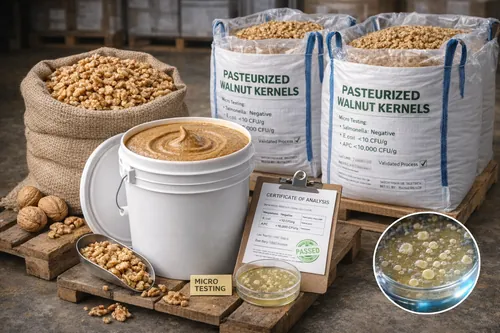
Bulk Pasteurized Walnut Kernels for wholesale supply — Atlas Nut Supply

Validated pasteurization (what buyers mean)

“Pasteurized” can mean different things across suppliers and customer requirements. Industrial buyers usually care about three things: (1) the lethality target, (2) documented validation, and (3) lot-level verification.

Many programs are designed around a defined pathogen reduction objective (commonly expressed as a “log reduction” target).

Buyers may request a process authority letter, validation summary, or program statement aligned to their spec language.

COA, micro results per lot, traceability/lot coding, and “hold-and-release” expectations are often part of pasteurized programs.

Pasteurized kernels still need to meet appearance, moisture, defect, and oxidation expectations—especially for longer shelf-life lanes.

If your customer references a specific standard or procurement spec (micro limits, chemical limits, sampling, or storage temperature), include it in your inquiry so we can match the right program without iteration.

Product specifications (typical quote framework)

Below is a practical spec layout used in many industrial sourcing conversations. Final limits are always customer- and program-dependent. Where noted, example targets are commonly referenced in USDA procurement specifications for shelled walnuts.

Parameter Typical target / example Why it matters
Grade / cut Halves / quarters / pieces Defines appearance, bite, and breakage tolerance in processing and finished goods.
Color Light / light amber / amber (program-dependent) Drives visual outcome (toppings, inclusions, confections) and may influence perceived flavor profile.
Defect limits Shell fragments / foreign material / discoloration (as specified) Controls QA risk and protects line performance (screening, rework, customer complaints).
Moisture Set to shelf-life & flow needs Impacts texture, clumping, and oxidation risk. Critical for extended storage and export lanes.
Pasteurization method Program-dependent (validated) Defined lethality + documentation package aligned to the customer’s requirement.
Micro verification Organisms + limits (as specified) Typical programs specify indicators (APC, YM, coliforms, E. coli) and pathogen expectations (e.g., Salmonella negative in a defined sample size).
Oxidation indicators Peroxide / FFA (when required) Some buyers use oil-chemistry indicators to manage rancidity risk for longer holds or sensitive applications.
Packaging format Poly-lined cartons/bags; larger containers Controls oxygen/light exposure and handling efficiency. Impacts storage, dosing, and plant hygiene flow.
Traceability Lot coding + origin support Required for audits, customer approvals, and recall readiness.

Notes: For buyers using USDA-style procurement language, examples can include APC/YM/coliform/E. coli thresholds and Salmonella negative requirements, plus chemical analysis targets for shelled walnuts such as peroxide value and free fatty acids. Provide your customer’s exact spec if you have it so we match correctly.

Packaging and storage drive shelf-life. Many industrial programs focus on keeping product sealed, limiting oxygen/light exposure, and maintaining cool conditions (especially for longer hold times).

Pasteurized walnut kernel program options

Common variables (availability varies by season, grade, and supplier program):

  • Validated pasteurization: method + validation package aligned to your customer requirement.
  • Micro targets & sampling: organisms/limits, sample size, and hold-and-release expectations.
  • Kernel grade: halves/quarters/pieces; size targets as applicable.
  • Moisture + shelf-life expectations: aligned to storage temperature, humidity, and expected hold time.
  • Defect limits: sorting/cleaning expectations (shell/foreign material/discoloration thresholds).
  • Packaging: poly-lined cartons/bags and larger containers; pallet constraints supported.
  • Documentation: COA, traceability/COO, and supporting compliance documents per program.

Looking for non-pasteurized kernels? See bulk raw walnut kernels. For smaller particle formats, see walnut meal.

Applications & performance notes

Pasteurized walnut kernels are commonly used where buyers need micro alignment without sacrificing usability:

  • Bakery & bars: inclusions where grade consistency drives appearance and bite.
  • Confectionery: coatings, clusters, and chocolate systems where oxidation control matters.
  • Savory & sauces: chopped/puréed kernels in pesto, spreads, dips, and dressings.
  • Coatings & crusts: chopped kernels used on proteins and frozen items; size consistency improves coverage.

Storage tip: walnuts last best when kept airtight, away from strong odors, and under cool conditions. For longer storage windows, cold storage/freezing may be used depending on your program and inventory plan.

Packaging & storage planning (often overlooked)

Pasteurized kernels are frequently used in programs with tighter QA controls, so packaging and storage expectations should be aligned early (especially for export lanes, long holds, or high-sensitivity finished goods).

Many California walnut programs ship halves/pieces in 25 lb poly-lined cartons, with some smaller sizes in 30 lb cartons and larger bulk containers available for industrial users.

For storage up to ~6 months, cold storage is commonly used (cool temperatures + controlled humidity). For longer storage windows, freezing may be considered depending on your plan and QA requirements.

Barrier packaging and good sealing practices help reduce rancidity risk. If your customer is shelf-life sensitive, tell us your distribution conditions.

Share pallet height limits, dock constraints, and whether product will be portioned, reworked, or re-packed so we can align packaging and pallet patterns.

If your program requires specific packaging (liners, oxygen barriers, nitrogen flush, or tamper-evident features), include those requirements in your inquiry.

Specs checklist (quote-ready)

Send your spec sheet if you have one. Otherwise, start here for faster alignment.

  • Product: Pasteurized walnut kernels
  • Pasteurization requirement: required language/validation package (if specified by customer)
  • Micro targets: organisms/limits + sample size + hold-and-release expectations (if applicable)
  • Grade: halves/quarters/pieces + size distribution targets
  • Color preference: light/light amber/amber range (if required)
  • Defect limits: shell fragments, foreign material, discoloration, breakage thresholds
  • Moisture target and oxidation/rancidity expectations (shelf-life goal + storage temperature range)
  • Allergen handling expectations and cross-contact controls (as applicable)
  • Packaging: cartons/bags/bulk containers + liner needs + pallet constraints
  • Volume: first order + forecast cadence
  • Destination: city/state/country (and port if export)
  • Delivery window: required ship/receipt dates
  • Documentation: COA, traceability/COO, certifications if required

Include your end application and processing steps (mixing, baking, enrobing, chopping, rework) so we can recommend a grade and size distribution that performs well and reduces waste.

FAQ: Pasteurized walnut kernels

What specs do you need to quote bulk pasteurized walnut kernels?

At minimum: grade/size, packaging, volume, destination, and timeline. For pasteurized programs, include your validation requirement and micro targets (organisms + limits + sample size) for best matching.

What documentation is common in pasteurized programs?

Documentation varies by supplier program, but may include lot-level COA, micro results, allergen statement, country of origin support, traceability/lot coding, and supporting compliance documents. If you need specific certifications, note them in your request.

Do you ship pasteurized walnut kernels outside the United States?

Yes. We support export lanes depending on destination, volume, packaging, and required documentation. Share the country/port and timeline for planning.

How should pasteurized walnut kernels be stored for best shelf-life?

Keep sealed, cool, and protected from heat, oxygen, and light. Avoid temperature swings and keep containers closed between use. If you have long storage holds, share your target hold time and facility conditions so we can align packaging and practical handling targets.